Human Rights Guide
A text-only, color-coded guide that explains human rights to the public. Built to expand, it grew from 1 to 12 countries and won the Erasmus+ Quality Award 2024.
- Client
- Baltic Human Rights Society
- Country
- EU
- Industry
- NGO, education
- Year
- 2022–2025
- My role
- UX and UI designer
- Team
- An external strategist, a UI designer and a PM
Problem
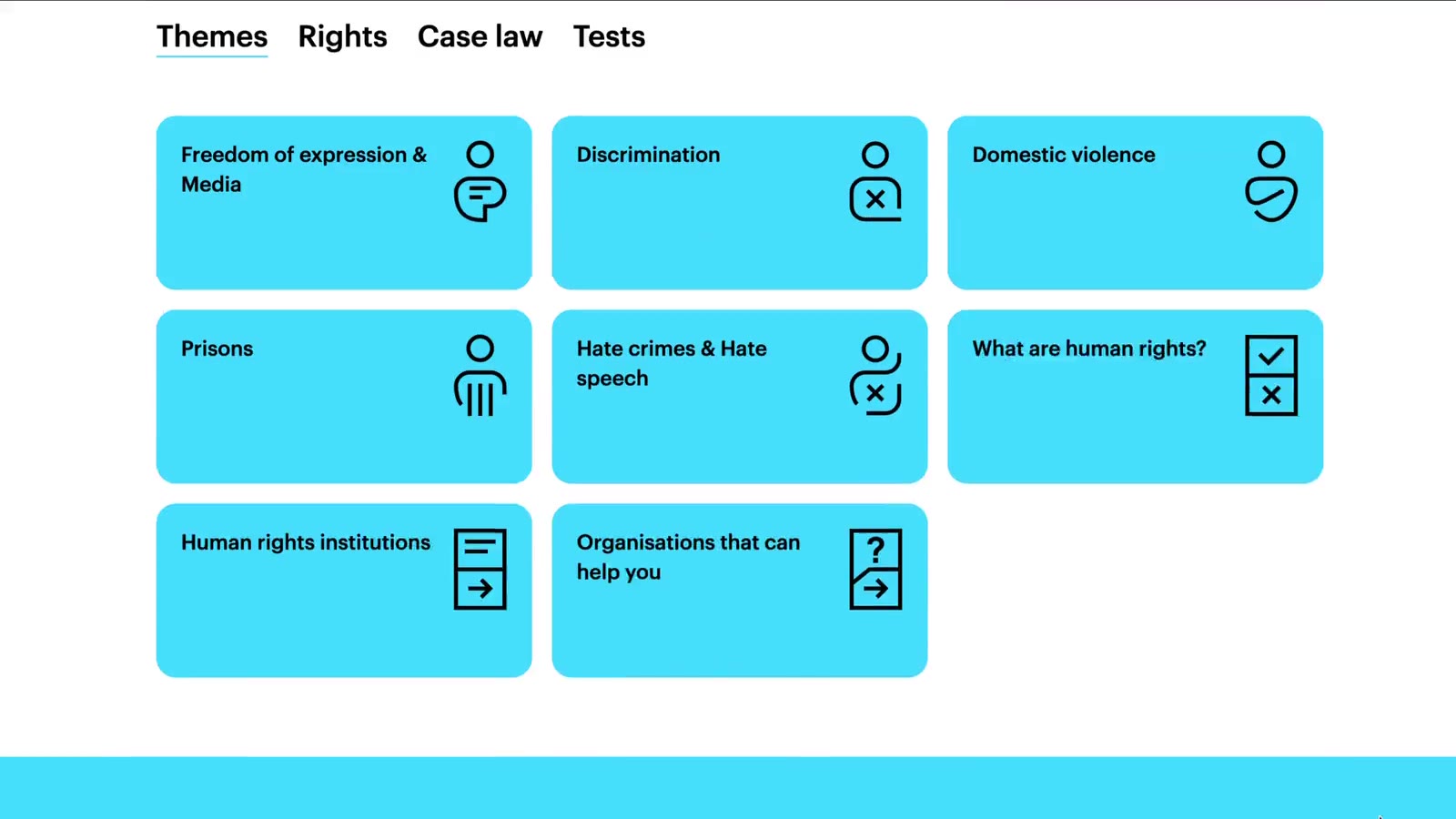
Human rights had to be understandable to people without legal knowledge, in a text-only format that is easy to roll out to new countries.
- Citizens and inhabitants: rights holders in everyday situations
- Professionals
- Educators and learners
Approach
Every decision traces back to evidence. Each step has an ID, and every insight and decision names the evidence it came from.
S001
Source
Project brief
Three audiences, a text-only format, more countries to come.
E001
Evidence
No legal background
Most readers don’t know the law.
From S001
E002
Evidence
Different kinds of content
Themes, rights, case law and knowledge tests.
From S001
E003
Evidence
More countries ahead
Each country adds its own content.
From S001
I001
Insight
Start from daily life
People meet human rights in everyday situations, not in legal terms.
From E001
D001
Decision
Themes and situations
Learn through themes and daily-life situations.
From I001
D002
Decision
One color per kind of content
Light blue, green, pink and orange.
From E002
D003
Decision
An expandable structure
New countries can be added without a redesign.
From E003
Solution
I designed the UX and the UI, working with an external strategist, a UI designer and a project manager.
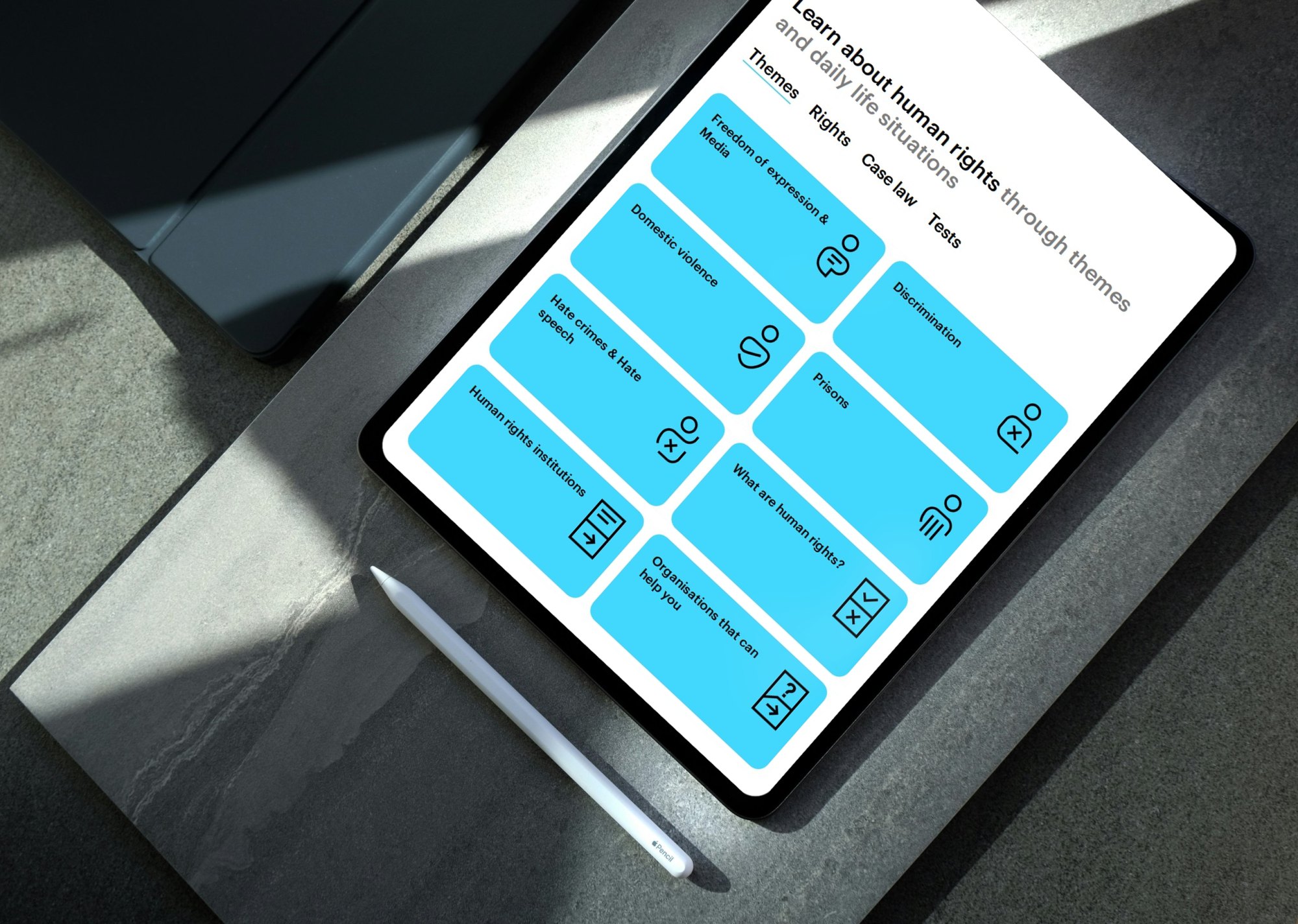
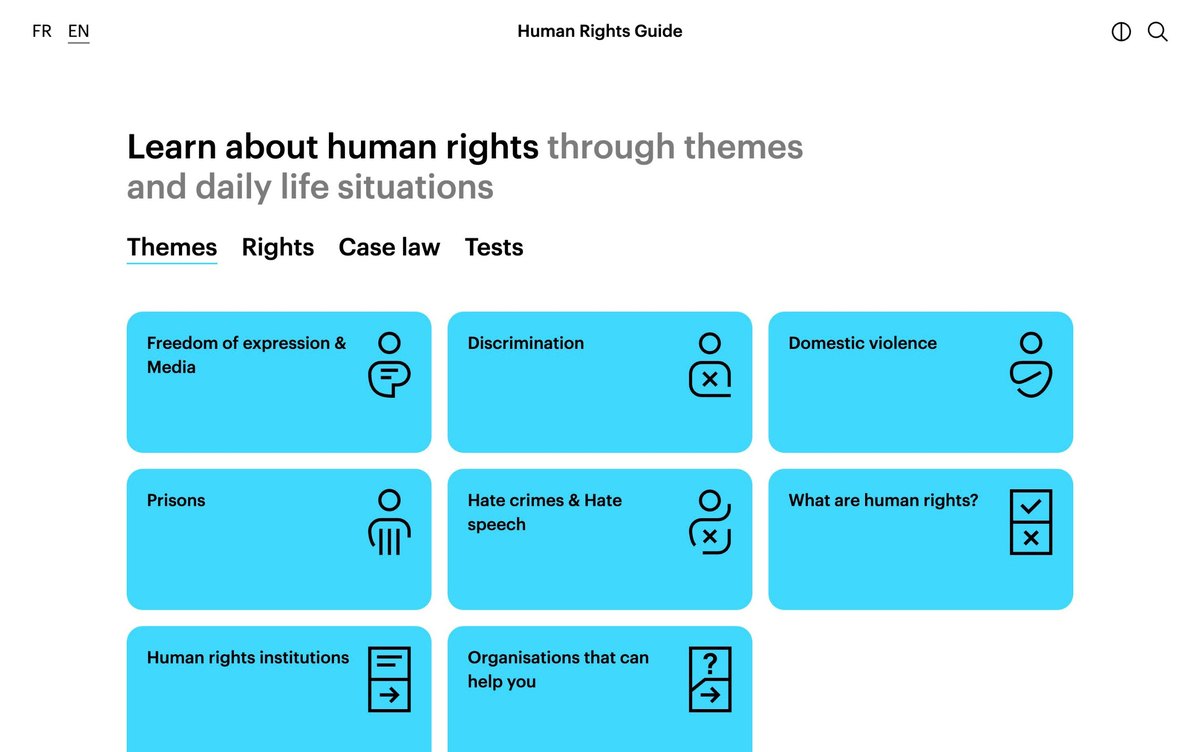
Eight main topics
People learn about human rights through themes and daily-life situations. Topics include:
- What human rights are
- Freedom of expression and media
- Discrimination
- Domestic violence
- Hate crimes and hate speech
- Human-rights institutions and organizations that can help
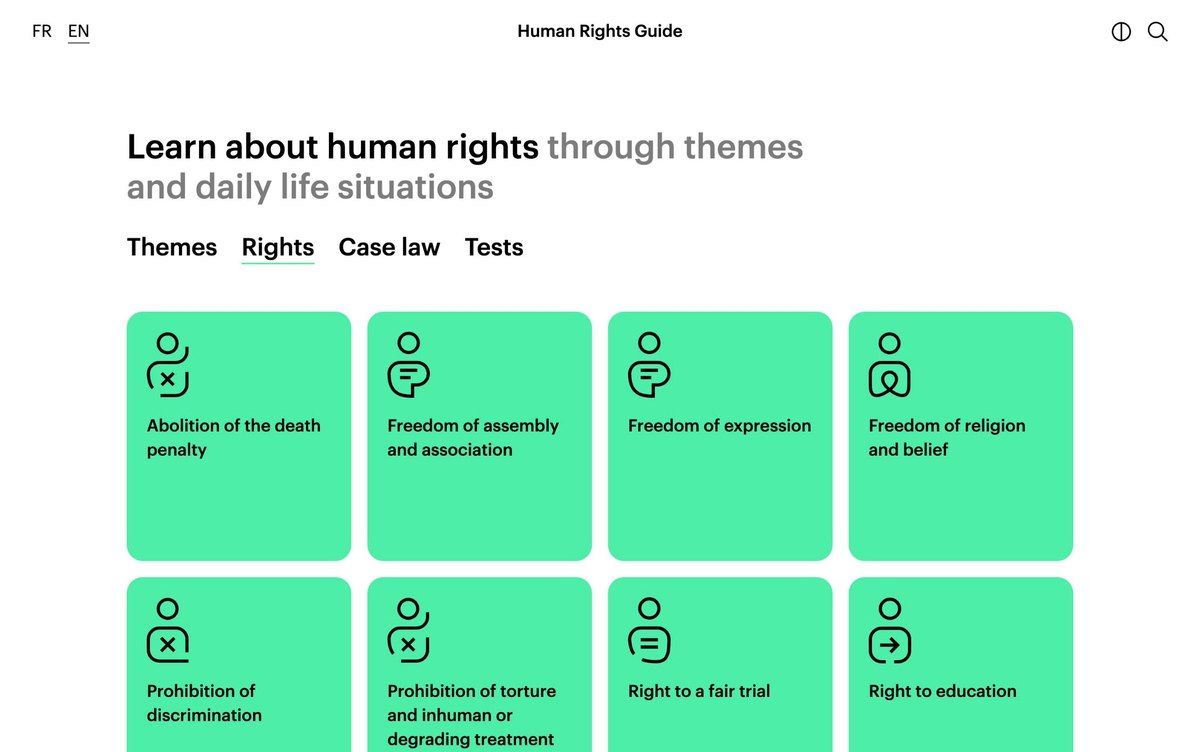
A color system
- Light blue for themes, also the identity color
- Green for rights
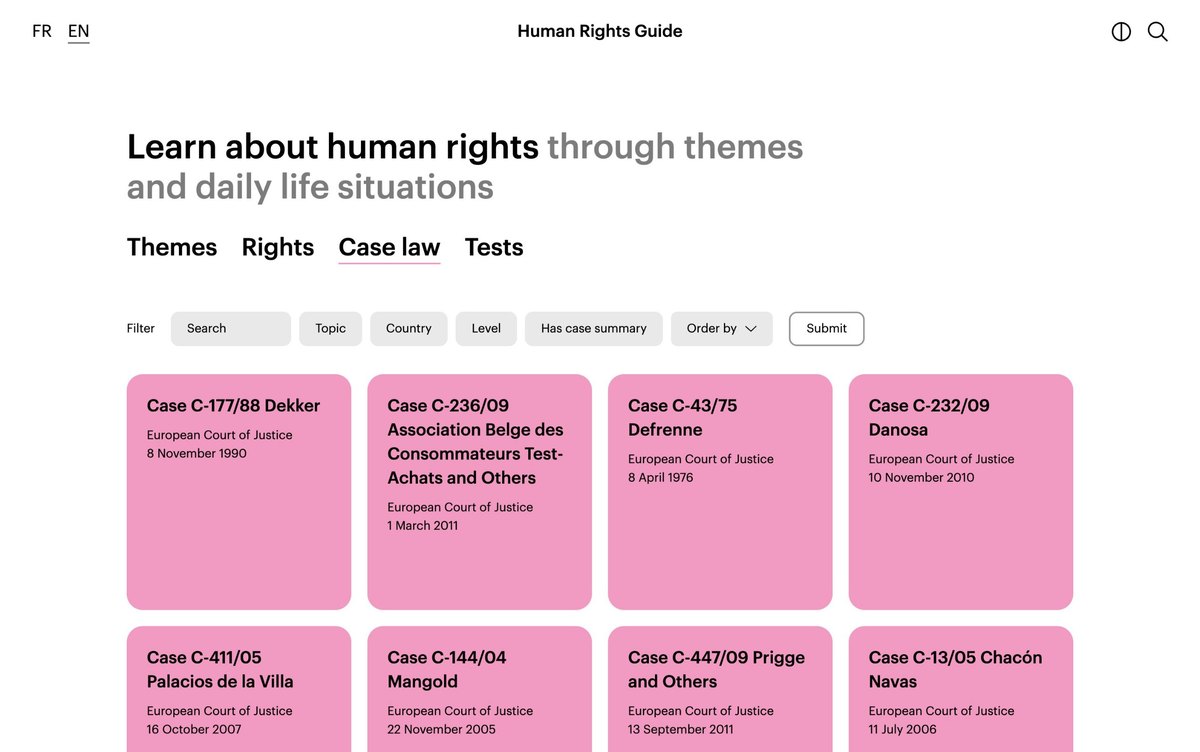
- Pink for case law
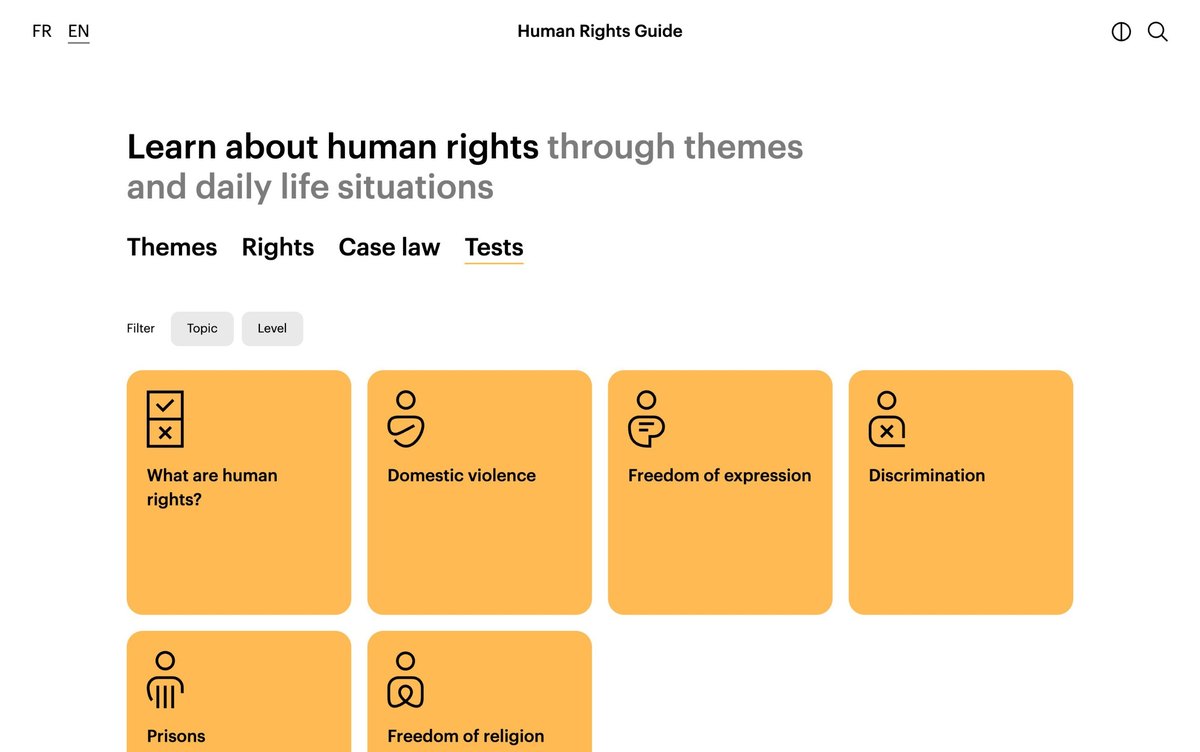
- Orange for knowledge tests
Outcome
The guide grew from 1 country to 12. Co-funded by the European Union, it won the Erasmus+ Quality Award 2024.